
 Welcome back, friend, to my Wall of Fame, the little space upstairs where I celebrate cool people I admire with collages I make. So far you’ve met Abe, Dolly, Mary, Josephine, Vincent, Fred, and Barack. This week, I’m excited to introduce you to Mystery Person #8.
No, that little green guy isn’t him. That’s Ampelmännchen. He hangs out in traffic lights all over Berlin. Back in June, Todd and I spent a week there on a study trip about my Mystery Person’s life. Ready for some clues?
 Wait a sec. I’ve already introduced you to Josephine Baker.
Oh right. She’s stopping by to say that she and MP #8 were born just four months (and 5000 miles) apart in 1906. To be so close in age, they sure are different. She grew up in poverty in St. Louis, Missouri, and he was raised in Germany with a cook, maids, governesses, and a chauffeur. I guess they had a lot in common too. They both fell in love with New York City, and jazz made their hearts sing.
And about the work they did in secret…well, we’ll get to that.
On to Clue #2…
 Well, hello, Dolly!
She just wants to remind us that our MP was a child prodigy in music. His family was sure he’d play the piano professionally. Most of them were scientists and doctors and lawyers, so he was an odd bird. (A much-loved odd bird, though.)
Did I mention that he had a twin? Her name was Sabine and they were extremely close.
I bet Sabine wasn’t surprised when he announced to his parents and 6 other siblings that he wanted to become a theologian. After all, the two of them used to talk into the night about God and death and eternity. When one of their older brothers told our MP not to waste his life in such a boring, petty institution as the church, our fourteen-year-old MP said, “If that’s true I’ll reform it!”
You can’t say the boy wasn’t confident!
 Like Fred, kids were at the heart of his ministry.
When I signed up to go to on our church’s study trip, I had no idea how important children were to his ministry. He might have been a rising star of academic theology, (with a doctorate of theology at age 21!) but he had a real heart for kids and how they thought about God. As a former children’s minister, I love that so much!
I’m dying to show you my favorite photo of him, so I’m going to break with tradition and do an early reveal. His life was too brutal and brave and beautiful to dance around his name anyway.
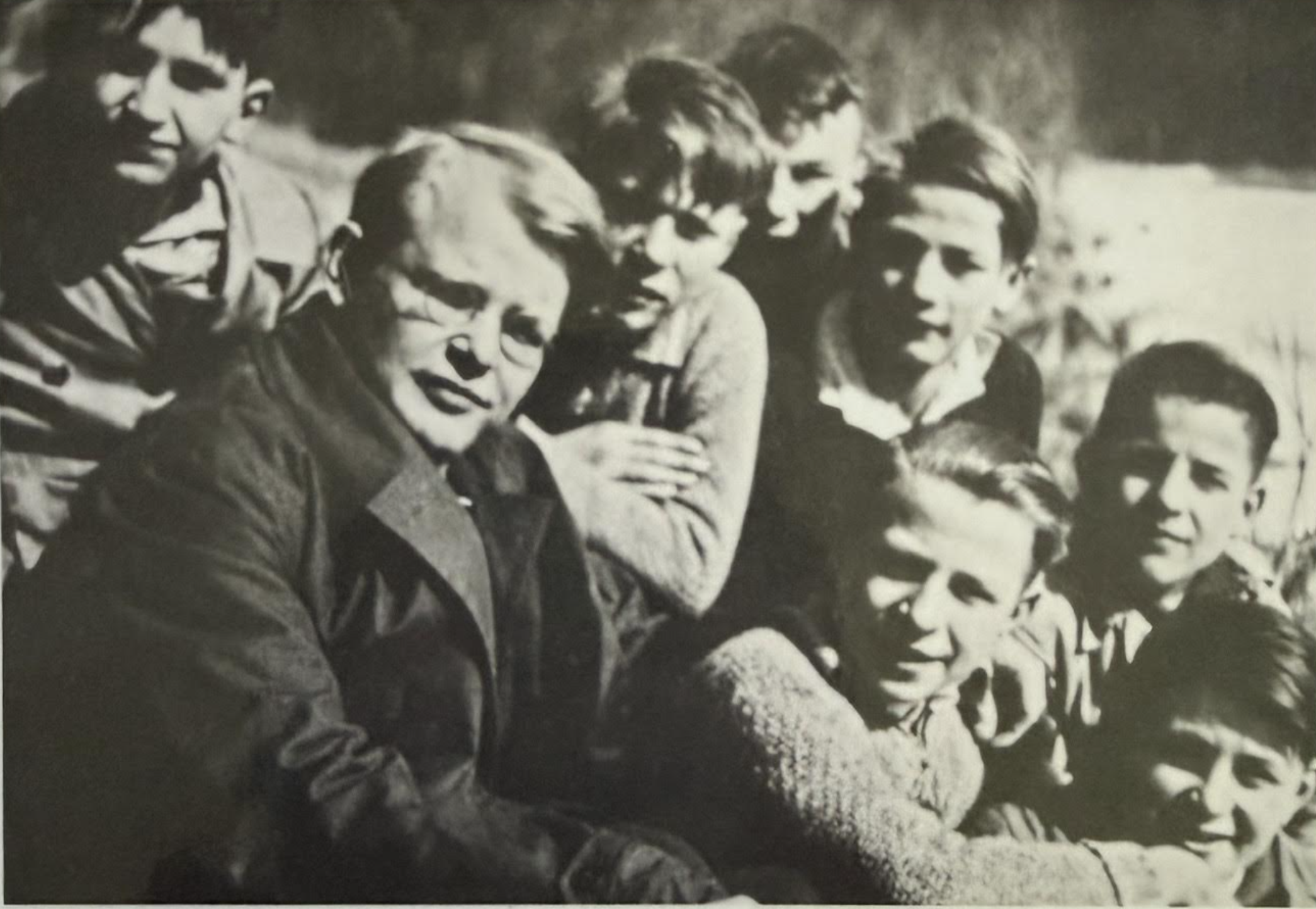 Friends, meet Dietrich Bonhoeffer.
See those boys surrounding him? They were part of a confirmation class in a rough section of Berlin. Before Bonhoeffer became their teacher, the boys were so out of control that the pastor of Zion Church begged the synod for help. But no wonder the boys acted up. It was 1932, the year before Hitler took power, and in order to get a foothold in working-class communities like theirs, the Nazis were wreaking havoc, scaring communities to death. They’d send Brownshirts (the SA, a violent paramilitary wing) into their neighborhood to start street fights so that they could then step in and stop them. “See?” the Nazis would say. “We’re the party of law and order.” Violence was nothing new to the boys. They were terrified, never knowing when they’d turn a corner and get their teeth knocked out.
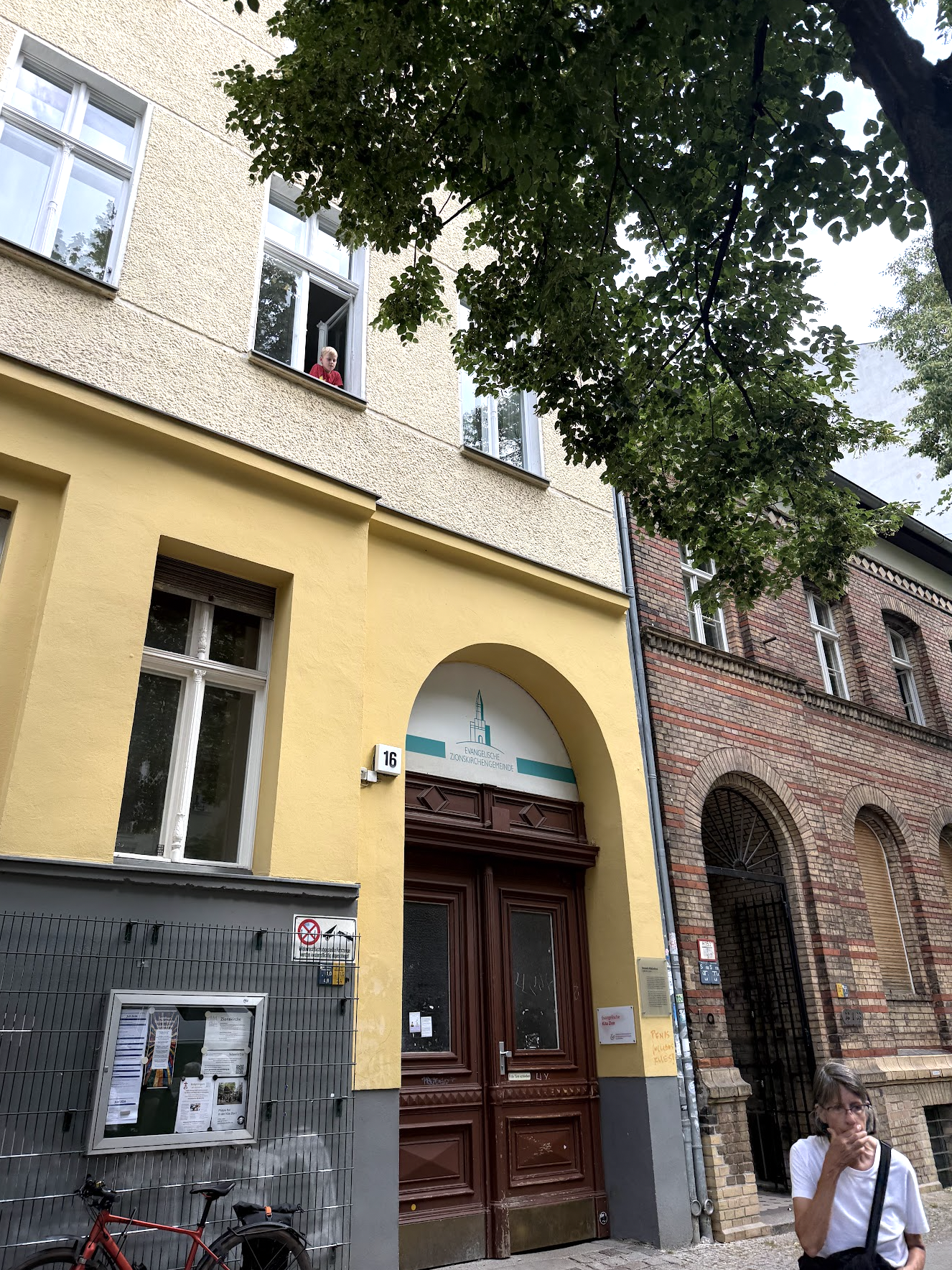 As Dietrich climbed the stairs of that yellow building there, ready to meet the boys with the pastor, they stomped their feet, roared the pastor’s name, and threw garbage down on both of them! The pastor had had enough and left Bonhoeffer on his own. Dietrich sat down and very quietly began telling a story about something he’d experienced in Harlem. Little by little, the boys settled down to hear it. “If you’ll listen,” he told them, “I’ll return with more stories.”
They listened.
Before long, he’d created a community amongst them, visiting their homes, even moving into the neighborhood to be close to them. On the day of their confirmation, he preached a sermon on the passage in which Jacob wrestles with God. Hold on to God like Jacob did, he encouraged them. Don’t become one of them! In an election that very day, the Nazis won 37% of the vote, signaling a dangerous surge in their power. The next year, Hitler became chancellor.
With Hitler’s rule, German protestant churches were co-opted into the Reich Church. Suddenly, swastikas popped up on pulpits, pastors preached that Jesus was a Roman, not a Jew, and Hitler became the new Jesus! Two new commandments were added to the ten: Honor your Fuhrer and master, and Keep the blood pure and your honor holy.
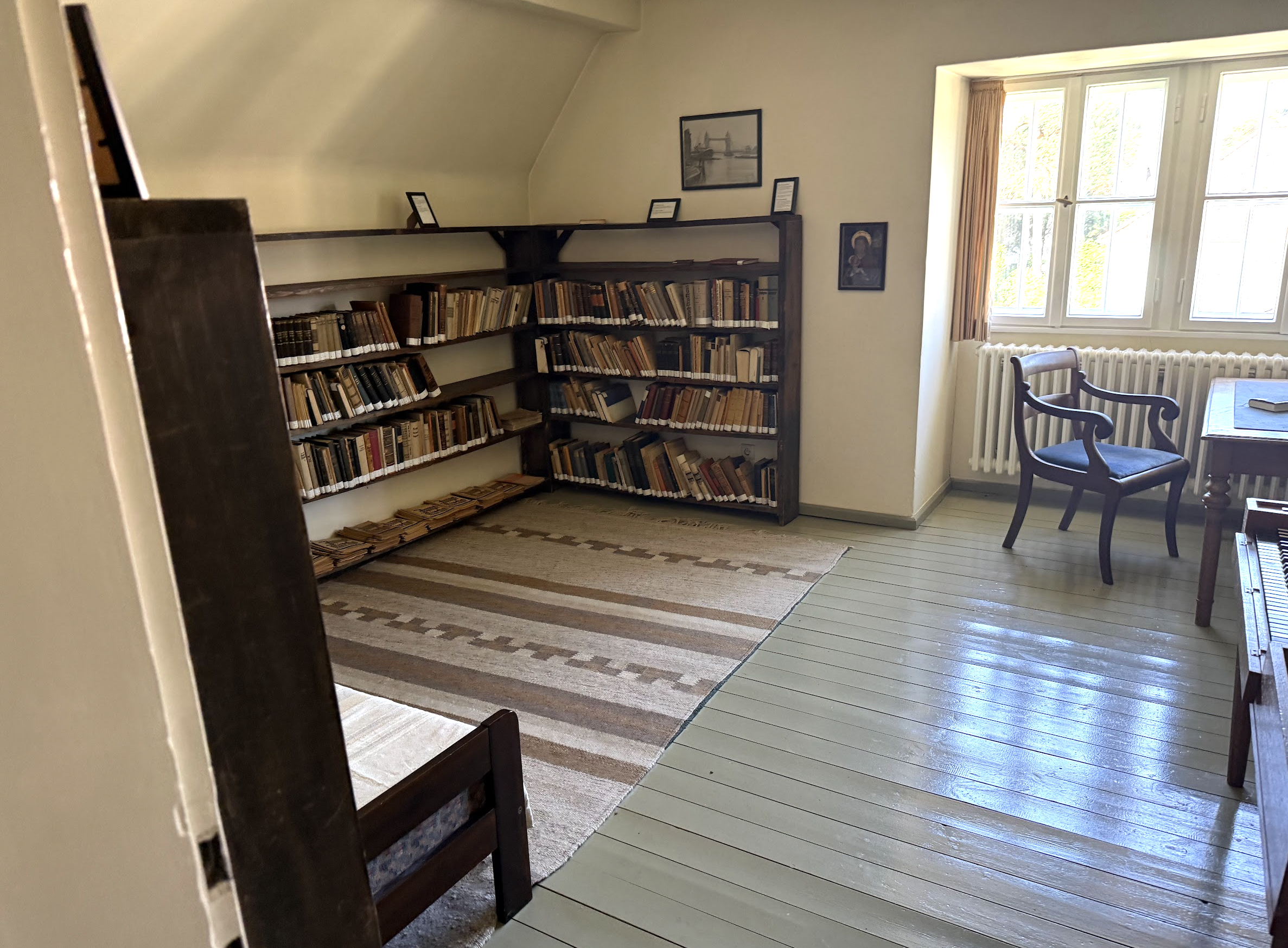
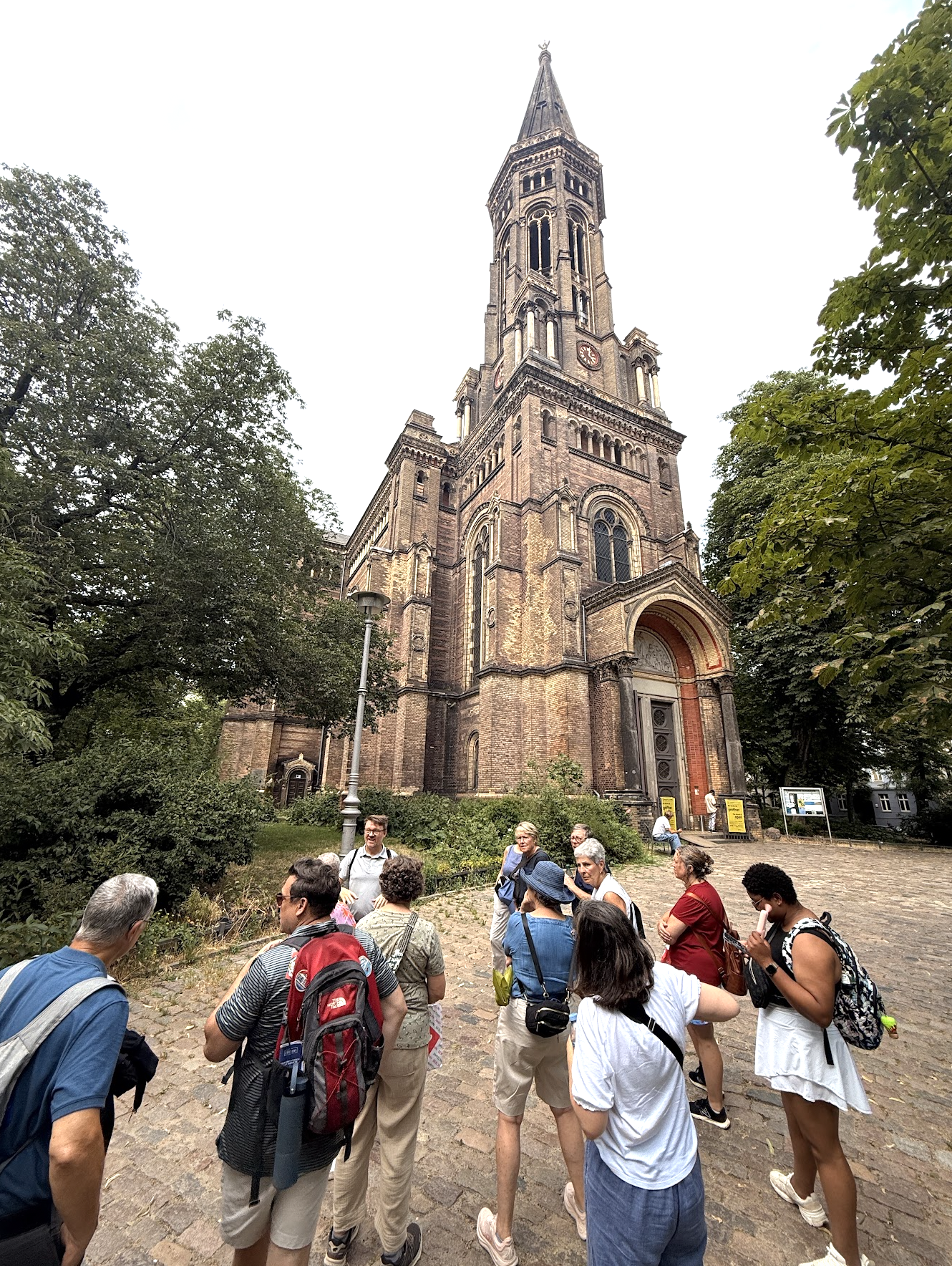 Dietrich and his pastor friends had to do something. They formed the Confessing Church, a network of churches resisting Nazi interference, including Zion Church. These churches needed trained pastors, so Dietrich led an underground seminary. (He was only 29 years old!)
There is so much more about Dietrich Bonhoeffer that I wish I had time to tell you. Like how falling in love with the African-American Abyssinian Baptist Church in NYC turned his scholarly, academic love of theology into a deeply profound faith.
But let me just tell you two more things: the brave way his story ends, and how Dietrich Bonhoeffer changed how I want to live out my faith.
 First, Dietrich’s ending.
After he returned to Germany to help his people, the Nazis turned up the notch on harassing him. Dietrich was forbidden to publish anything or to preach. He was confined to house arrest. His brother-in-law, Hans von Dohnányi, worked for the resistance movement within the Abwehr, the German Military Intelligence Service, and convinced the organization that the Nazis could make good use of all Dietrich’s contacts in churches throughout Europe. Once in, Hans connected Dietrich with a resistance group there seeking to overthrow Hitler. The only way to do it was to kill him.
As a committed Christian pacifist, Dietrich struggled with this, but he knew he must act. The movement needed someone who had contacts with the British government, so that when Hitler was murdered, the Brits would stop bombing Germany long enough for a new German government to be put into place. Dietrich was friends with Bishop Bell, who had a seat in Parliament.
Dietrich traveled to Sweden in May of 1942 and met with Bishop Bell. Bell brought his plea to the British government, but they ignored it, saying they’d been burned before.
Later that year, Dietrich participated in Operation Seven, in which he helped smuggle fourteen Jewish people out of Nazi Germany into Switzerland. Seven months later, on April 5, 1943, Dietrich and Hans are arrested by the Gestapo and imprisoned separately. They interrogated them incessantly and Dietrich was always worried that any differences in their stories would get them both killed.
Two years later, Dietrich was still in prison when Hitler was given the diary of Admiral Wilhelm Canaris, the head of the Abwehr, documenting their two failed murder attempts on his life. Hitler is enraged and commands the execution of Canaris, Dietrich Bonhoeffer, and four others. On April 8, 1945, they were taken to the Flossenburg concentration camp and pronounced guilty. At dawn the next morning, they were stripped, forced to walk to the gallows, and hanged.
 Dr. Andrew Root, our amazing teacher, made it clear: Dietrich never wanted to be a hero. He wanted to be remembered as a faithful brother.
So how did this faithful brother change the way I want to live out my faith?
Dr. Root told our group that Dietrich Bonhoeffer took the phrase, “God became human so that we could become divine” and changed it to “God became human so that we could become human.” I love that. Over and over in his teaching, Dietrich reminds us that the way to be close to God is to be close to the people around us, to be for them and with them in their pain, as Jesus teaches us to do. We don’t have to convince them of whatever we think is right or wrong, and we don’t have to save the world. (Jesus is already doing that.) Like Dietrich said, any place that appears abandoned by God is exactly the kind of place you’d be sure to find God.
So here’s my painted Dietrich, on the grounds of his Zionskirche. If you’d like a closer look, click on it it. I wish we could go there together!
If you’d like to learn more about Dietrich Bonhoeffer, nothing beats reading his own words in books like The Cost of Discipleship, Life Together, and others. There are also lots of books about him. I’ve loved Bonhoeffer as Youth Worker, by Andrew Root, and I enjoyed the graphic novel, The Faithful Spy by John Hendrix. I’d also suggest you google some podcasts about Bonhoeffer, especially the ones that feature Andrew Root.
If you’re going to be in the Raleigh area September 16, 2026, I’ll be giving a talk with pictures about Bonhoeffer and I’d love to see you there. Comment here and I’ll get back to you with details. 🙂
Thanks for reading!
🙂 Becky


Hi Becky. I won’t be in Raleigh but my folks might be interested in attending.
Super! It’s at Forest Hills Baptist in the Gathering Place. There’s a reception at 10:30 and then I’ll start the program at 11. (Wednesday, Sept 16, 2026) I hope they’ll come!
Thank you for this. He is my hero too, and have enjoyed reading his “The Cost of Discipleship” and also Bonhoeffer: Pastor, Martyr, Prophet, Spy by Eric Metaxas.
You’re so welcome, Deborah. Thanks for reading! 🙂
This is fabulous! I wish I could be in Raleigh to hear it. Maybe you could share it at our church!!🤔
Kathy, thanks! I’m excited about you and Todd presenting to our class. I may have to play hooky from teaching to come hear you two!
Becky