
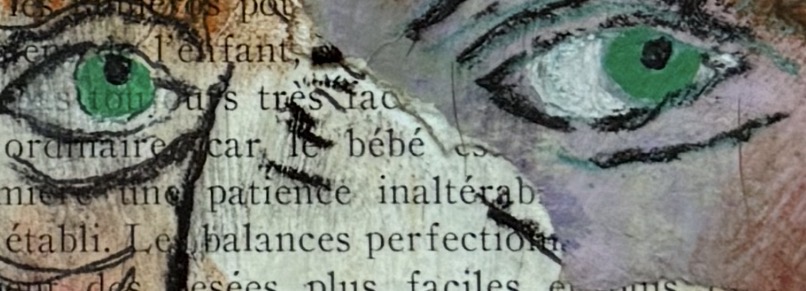
 Oh, friend, I’m so excited to introduce you to Mystery Person #5 on my wall, a man I’ve loved since I was a little girl. Well, I guess that’s a bit of a stretch since I didn’t even know his name for years. But for my entire childhood, he hung out with me and my family at the breakfast table.
Okay, so it’s not like he pulled up a chair as I wolfed down my cinnamon toast. But one of his works of art was there. Mom had hung the print in our kitchen, and though it was a bunch of flowers, it radiated a melancholy I couldn’t resist. Being a super-sensitive kid, those big, sad blooms spoke to my heart. (Yeah, I’m fun like that. Ha ha.)
Anyway, this poor, sad artist man crept behind me through my life, but it’s not like I was obsessed with him–at least not at the beginning. He was just so famous that every now and then, I’d catch a glimpse of him in the background.
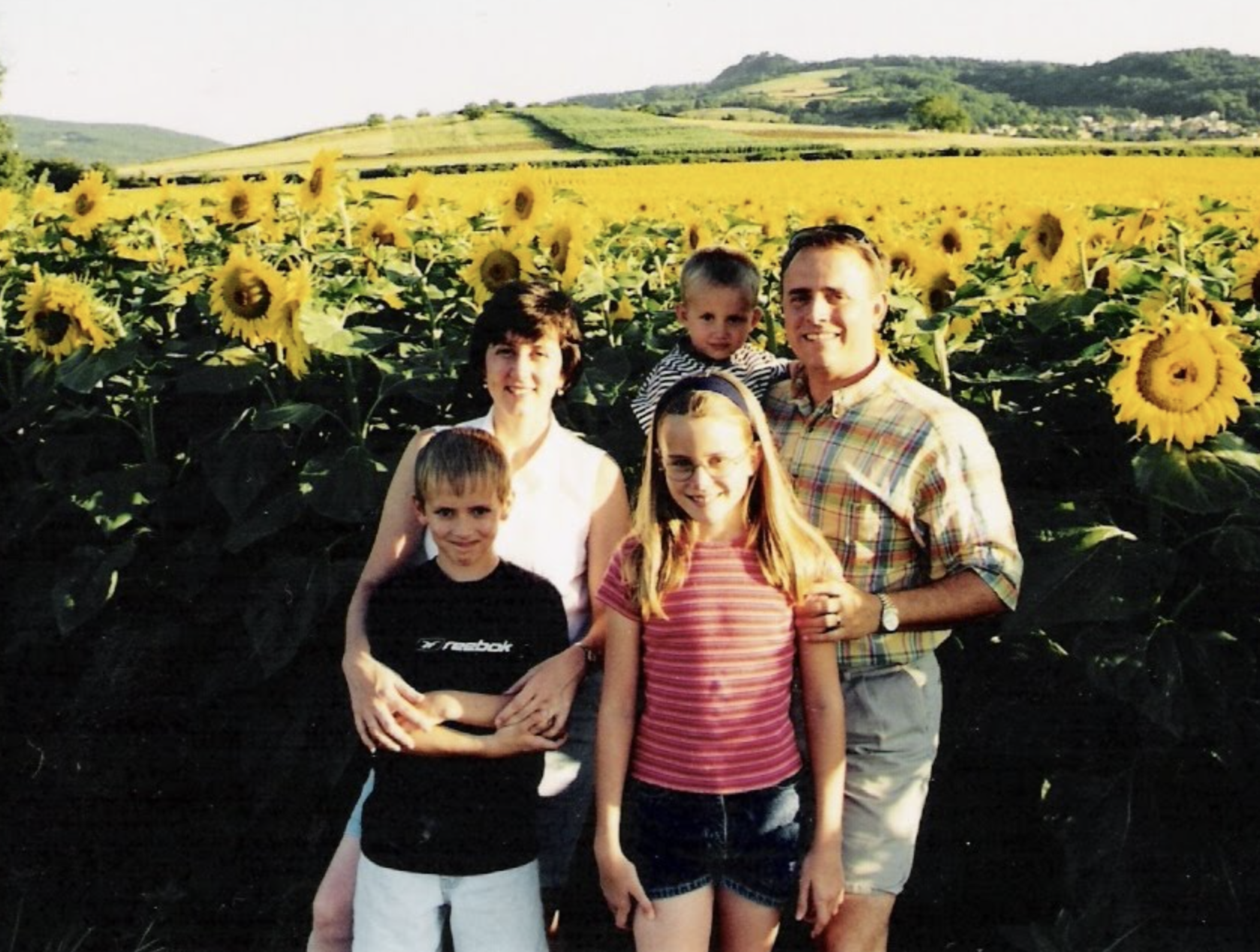 Then we moved to France when our kids were little.
That’s when I got obsessed.
Let me stop a minute here. Usually when you stop by, we play a little game. I show you tiny bits of the collage/painting I made honoring my Mystery Person and give you some facts about him/her, and you try to guess who it is. But my Dead Artist Boyfriend has such a unique style, you’d recognize him right away. You may have already guessed who he is.
So instead of our usual routine, I thought I’d share some of his work and story, and then I’ll make my reveal. Sound good?
Let’s go!
My Dead Artist Boyfriend was born in the Netherlands, to an upper-middle-class family of art dealers and ministers. He tried each profession and failed at both. In fact, my guy spent his whole passionate life chasing after love and God and success, while struggling terribly with mental illness. His lust for life was remarkable, and I’m so sorry that as he created so much beauty, he suffered so much pain.
Some people thought that his first paintings, like The Potato Eaters, here, were downright ugly.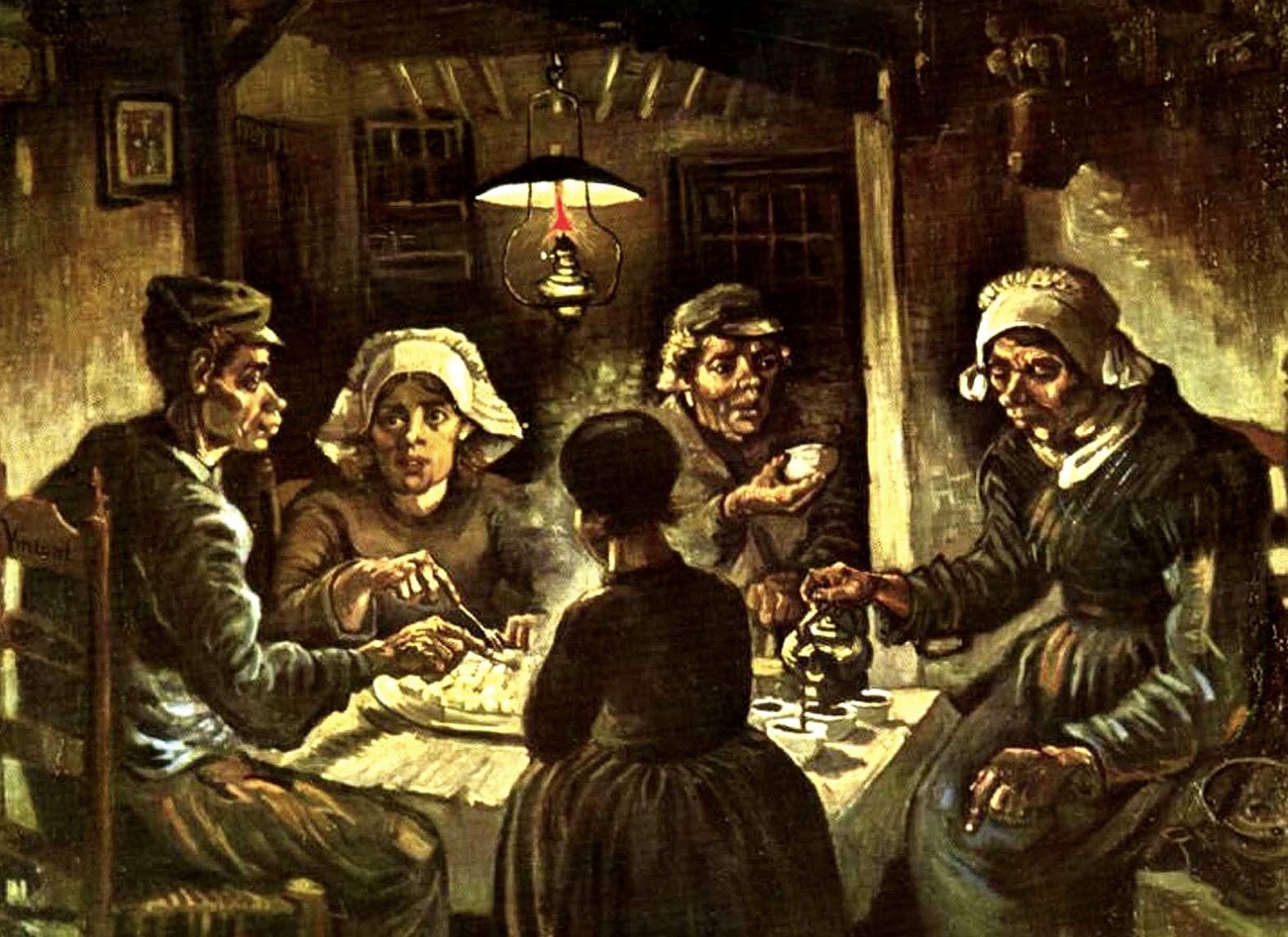
He painted this one while he was still trying to follow in his father’s footsteps, serving as a missionary. He’d failed his entrance exam for seminary but refused to let that stop him, volunteering to work with poor coal miners in Belgium. He loved the people there so much that he gave them everything he owned. He even moved into a small hut so he could give his lodging to a homeless person. The church authorities told him thanks, but no thanks. He was undermining the dignity of the priesthood.
He loved the people and wanted to depict their dignity and hard work. And he wanted to serve God. The more I think about it,” he wrote, “the more I realize there is nothing more artistic than to love others.”
Maybe that’s why he loved doing portraits.
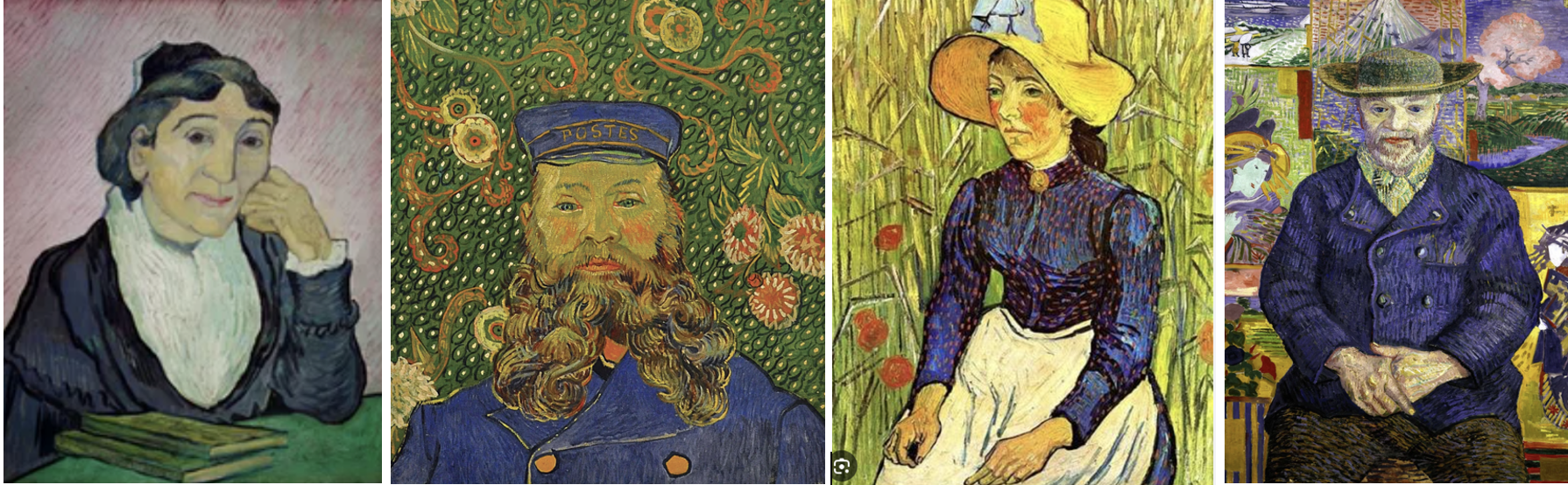
When he couldn’t afford to pay models, he painted himself–43 times!
But I’m skipping ahead…
After the church officials send him packing, he moves back in with his parents, and it’s not long before his dad tries to put him in an asylum. Experts say he probably had bipolar disorder. In his manic times, he painted incessantly, and other times he couldn’t paint at all.
His art dealer brother believes in his talent and begins supporting him, sending him money. He moves to Brussels to study art, and there’s quite a heartbreaking story about how he falls in love with a pregnant homeless woman who had turned to prostitution to survive. She works as a model for his art. He takes her in and wants to marry her, but when she returns to prostitution after the child is born, family and friends persuade him to leave.
Later, he moves in with Theo in Paris.
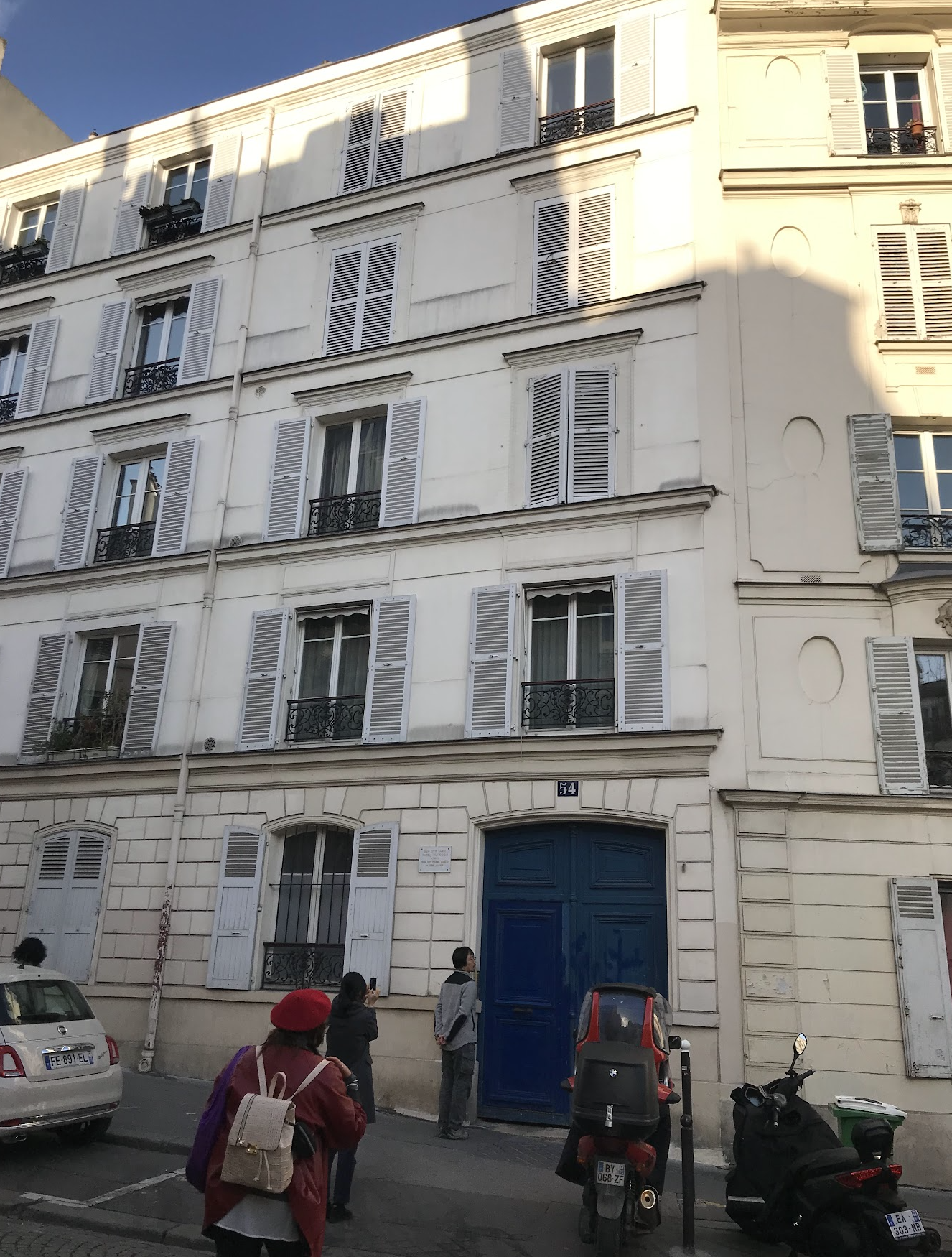 What kind of girlfriend would I be if I didn’t track down their apartment?
He stays there two years, experimenting with impressionism and creating more than 200 paintings– and apparently driving his brother crazy.
So my guy moves out to the suburbs…until he gets a big idea.
He’ll set up an art colony in Arles!
Arles would be perfect. The warmth! The famous light of Provence! Maybe it’ll even heal his smoker’s cough.
Artists could come and work together. He won’t be so lonely anymore!
 So, away he goes.
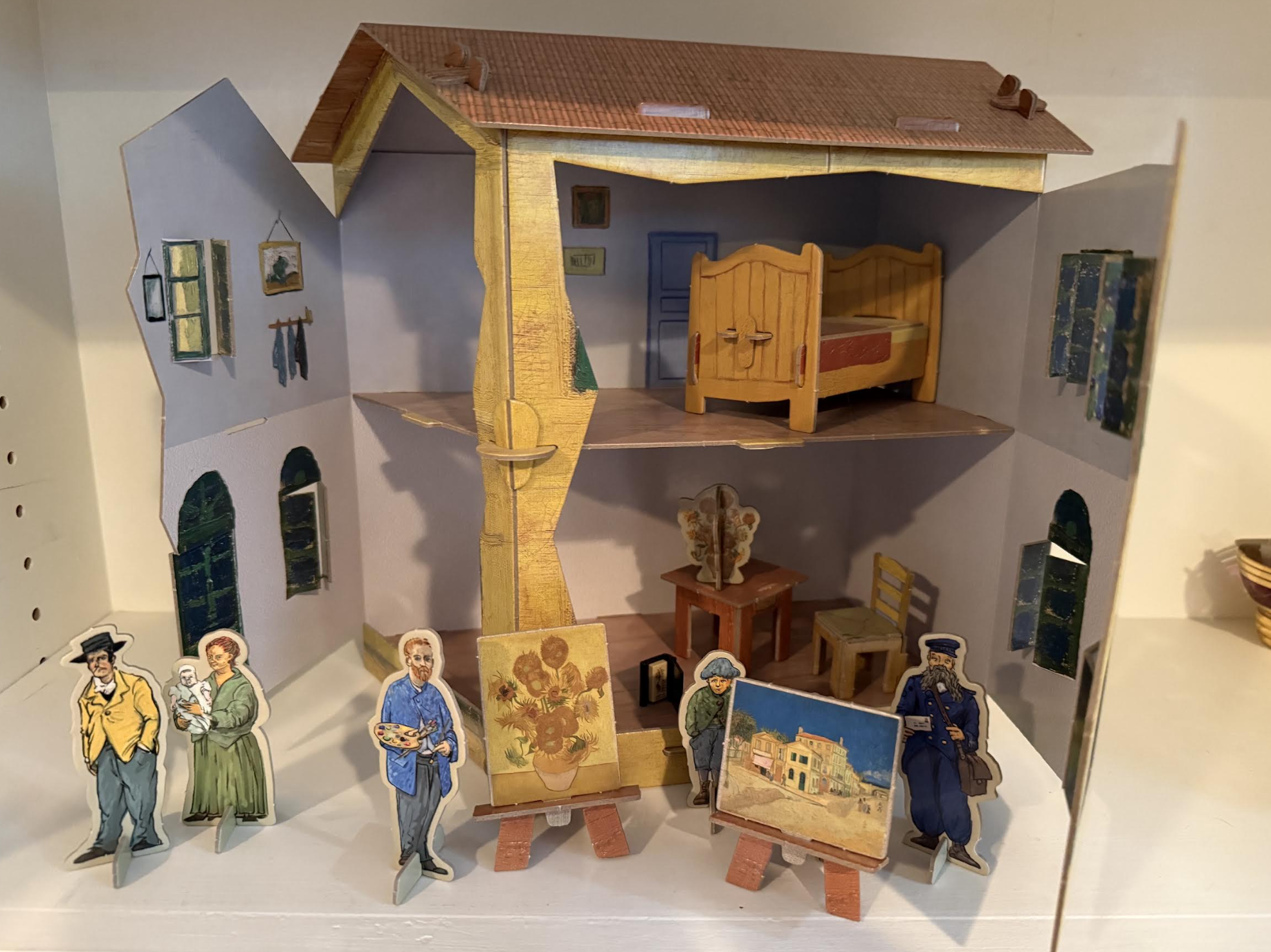
He moves into a little yellow house at 2 Place de Lamartine.
Oh sorry, that’s my little yellow cardboard dollhouse I bought myself at the Van Gogh Museum in Amsterdam. The little yellow house is long demolished. If you click on this one, check out his painting on the easel on the right. You’ll see what the house used to look like. Oh–and on the other easel is the painting that was hanging in my kitchen!
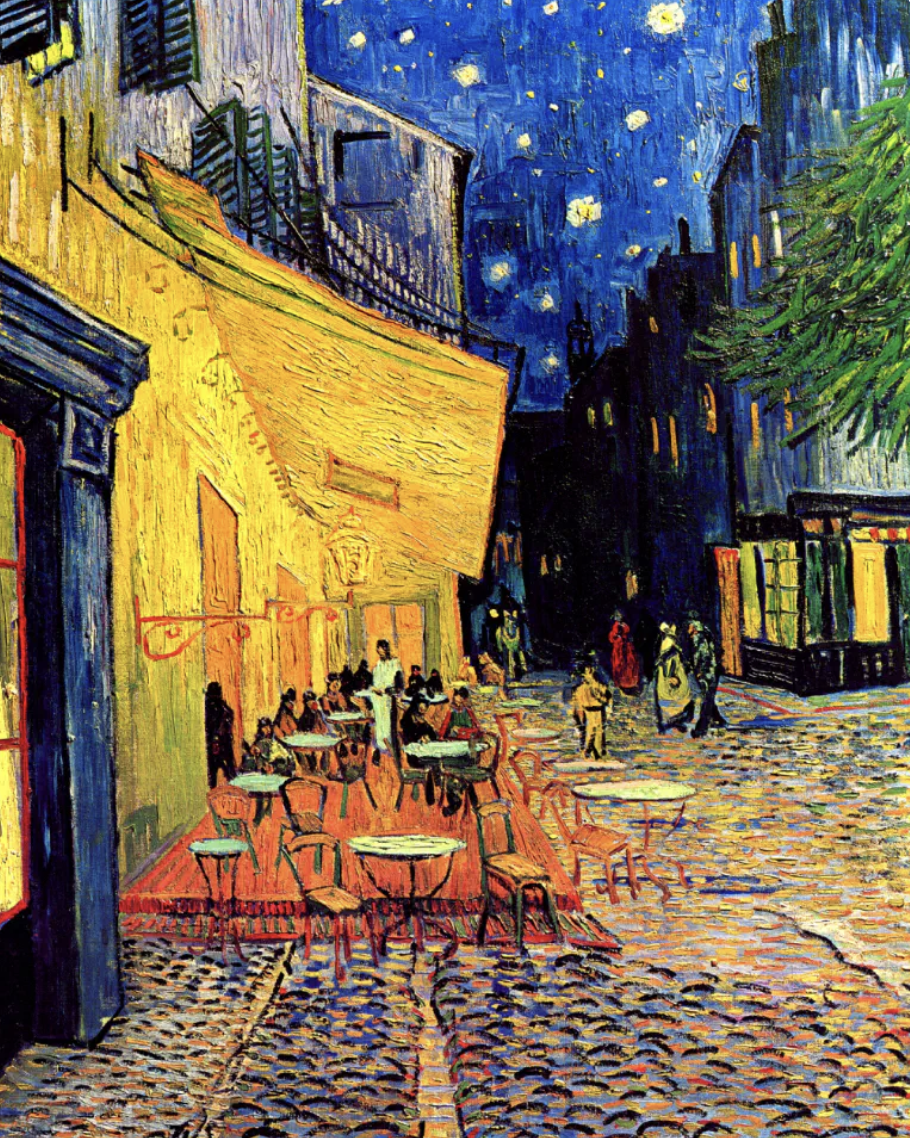 My guy paints like a wild man in Arles, creating masterpieces, like my favorite painting in the whole wide world, The Cafe Terrace on the Place du Forum, Arles, at Night. Sometime I’ll have to tell you how a couple of years ago, I walked down the street in Arles and THERE IT WAS! I was so shocked to see that I HAD STEPPED INTO MY FAVORITE PAINTING that I burst into tears and nearly knocked over a sign for tourists, alerting them to it!
Anyway, you might already know about Arles and the yellow house on account of my guy’s infamous brouhaha with Paul Gauguin. Yeah, it happened, but their relationship started out just fine.
After much pleading, Gauguin arrives in late October of 1888 and moves in to find the walls of his room covered with sunflower paintings! (Aww. My guy wanted companionship so badly!) They tromp all over Arles, painting together.
But by December they’re arguing constantly.
It’s said that they’re fighting over Rachel, a model who’s falling in love with Gauguin. (My poor guy seems to be rejected by every woman he meets– except for me and Sien.) So what does he do to show his frustration? He severs his own earlobe (not his ear) and takes it to Gaby, a young woman at a brothel. Gauguin gets out while the getting’s good.
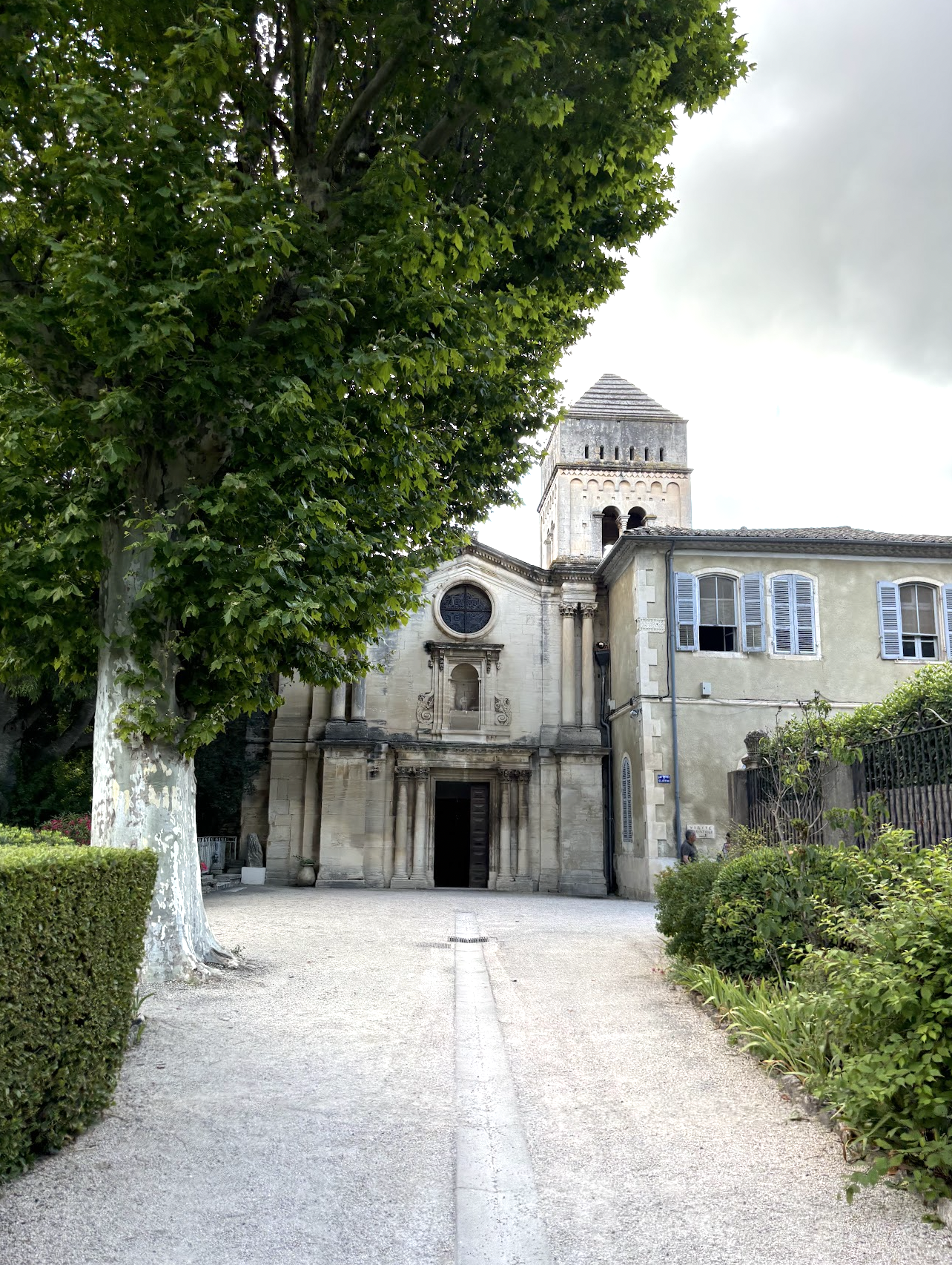 I guess my guy knows this isn’t normal. He admits himself to an asylum in St. Remy, St. Paul-de Mausole. (Check out the website with google translate. In addition to the historic part, it still operates as a mental health hospital.)
It’s a beautiful place and they let him paint as much as he wants.
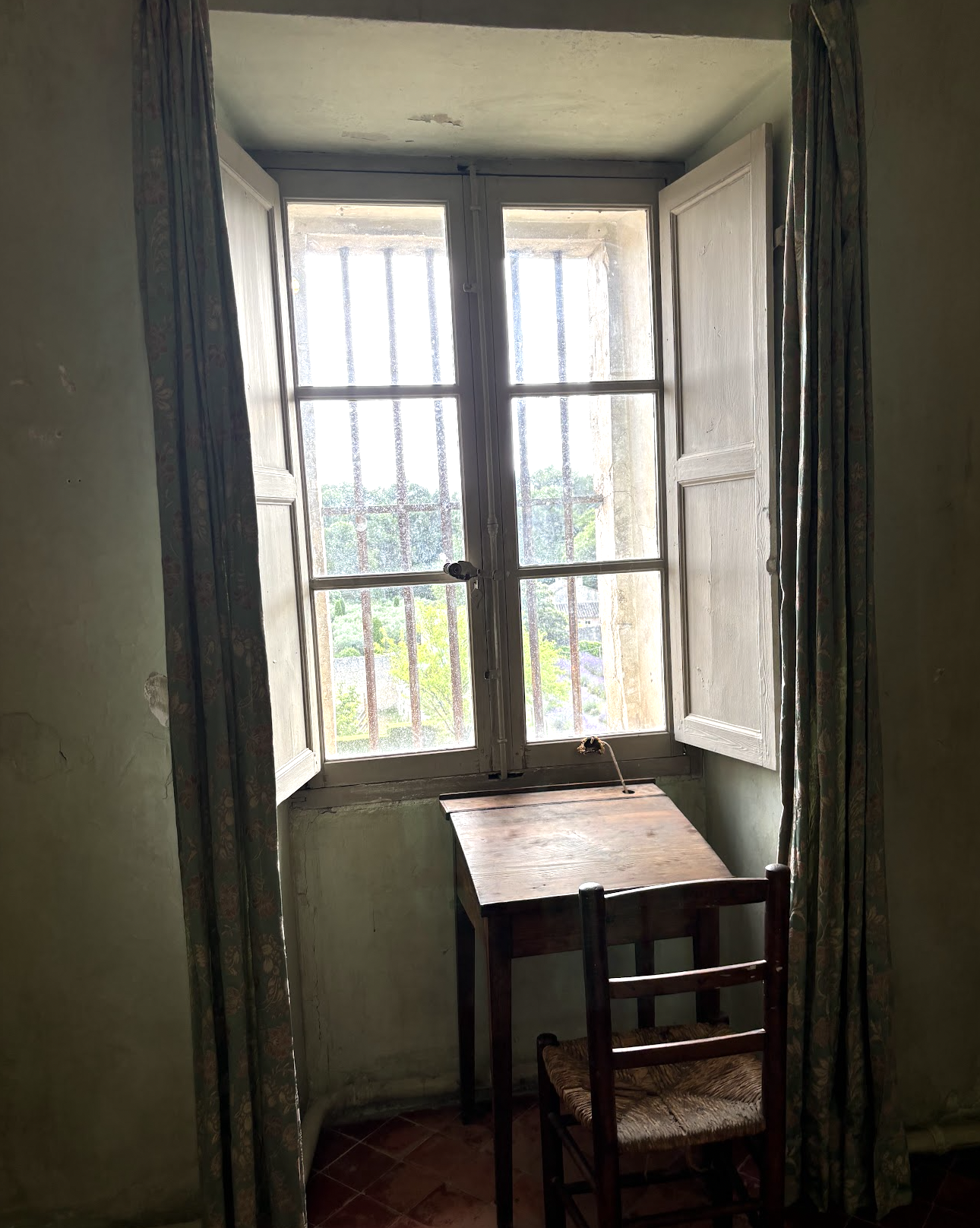 In fact, one morning, just before sunrise, he looks out this very window of his room and sees the subject of what will be his most famous painting. The Starry Night. The sky was real, but he added a village from his imagination.
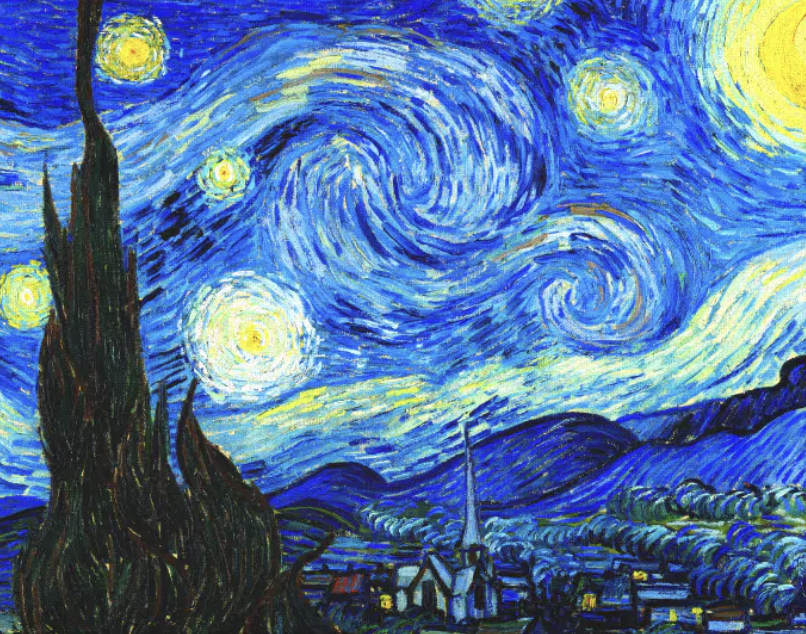
What an artist. In less than ten years, he created almost 900 paintings.
We’re now nearly to the end of his story. After a year at the hospital, he moves to a small village outside of Paris, Auvers-sur-Oise. He’s under the care of a doctor, but only two months later, he dies by suicide.
He suffered mightily during his life and yet created so much beauty! I’m so thankful to know about him.
Friends, meet my version of Vincent Van Gogh.
Since he’s an artist, I tried something new with him. I’ve been taking Amanda Evanston’s Faces class (so fun!) so I tried making four different sketches of his face to combine into one. Click on the photo if you want to see what I mean.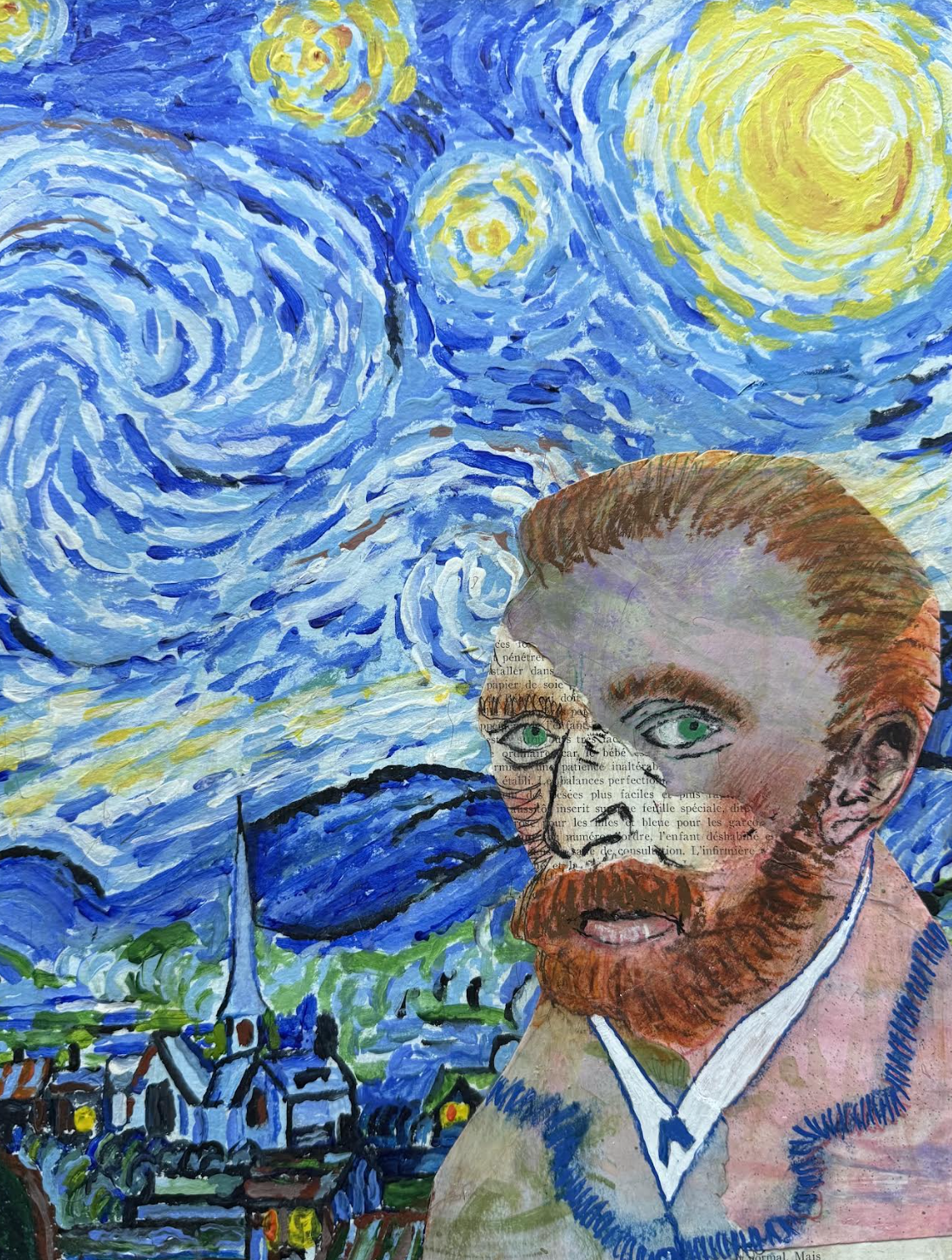
If you’re curious to learn more about Vincent, there are lots of movies to choose from. Check out Kirk Douglas’s 1956 movie, Lust for Life, the beautiful 2017 fully oil-painted animated movie, Loving Vincent, or Willem Dafoe’s 2018 movie At Eternity’s Gate. There are others, but these are the ones I know and love.
Thanks for stopping by, friend! I hope to see you next week to meet another hero of mine. He may not be my boyfriend, but he’s an amazing man!
🙂 Becky


I’m so glad the Sunflowers made such an impression on my young daughter! I guessed Vincent right away since I know you pretty well. You continue to teach me new things always—thanks sweetie!