
Welcome
Becky Ramsey | Author & Children’s Minister
Children's Sermons
Discover children’s sermons, or search our sermon directory

What is Godly Play?
According to the Godly Play Foundation, Godly Play is a creative and imaginative approach to Christian nurture.
Godly Play is about understanding how each of the stories of God’s people connects with the child’s own experience and relationship with God.
Godly Play respects the innate spirituality of children and encourages curiosity and imagination in experiencing the mystery and joy of God.
Read more about Godly Play here.
How do we do Godly Play at First Baptist Greenville?
Christians of many different denominations use Godly Play and probably do it differently, even within the same denomination. In this blog, I describe Godly Play by sharing the way our church does it. That doesn’t mean that it’s the best way or the prescribed way, or the only way, of course, but it’s the way that suits us best.
What are we here for?
We meet here to talk about Godly Play, to share what it’s all about and to discuss how to do it better.
The weekly blog posts are designed to help Sunday school teachers prepare for their Godly Play lessons, and the individual pages (see the tabs at the top of this page) share information about how we do Godly Play at First Baptist Church, Greenville, SC.
We’d love to hear from teachers everywhere, not just the ones at our church! We hope you’ll join our circle and share your ideas!
What Godly Play is Not
Godly Play is quite different from the traditional model in which the teacher tells the children what they need to know. Godly Play is not about things that are that simple. It is not just about learning lessons or keeping children entertained. It is about locating each lesson in the whole system of Christian language and involving the creative process to discover the depths of meaning in them.
Jesus Calls the Disciples
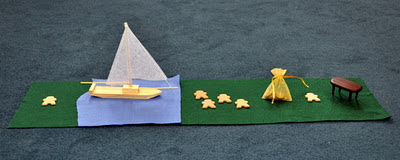 Welcome to Jesus Calls the Disciples.
This story focuses on the calling of the fishermen, Peter, Andrew, James and John, and the calling of Levi (also called Matthew.)
I love these two stories for many reasons. First, I think it’s so valuable for the children to begin to explore what exactly a disciple is and that Jesus calls us all to come along with him and help him do his work. The fisherman miracle is so powerful, and it introduces the beautiful idea that Jesus calls ordinary people to bring in others to join the faith journey. (By the way, it’s also a great time to talk about why Christians use the fish symbol, if you want.) The Levi story helps us remember that we are all broken, that nobody is “good enough” to be called by God, yet God still calls each of us.
To inspire the kids–and for extra fun– I’ll have goldfish in your room and small containers so that you can provide individual servings–to stay safe Covid-wise.
IDEAS FOR THE CREATE A GIFT FOR GOD TIME
Re-create the Story
Children could retell the story in many ways:
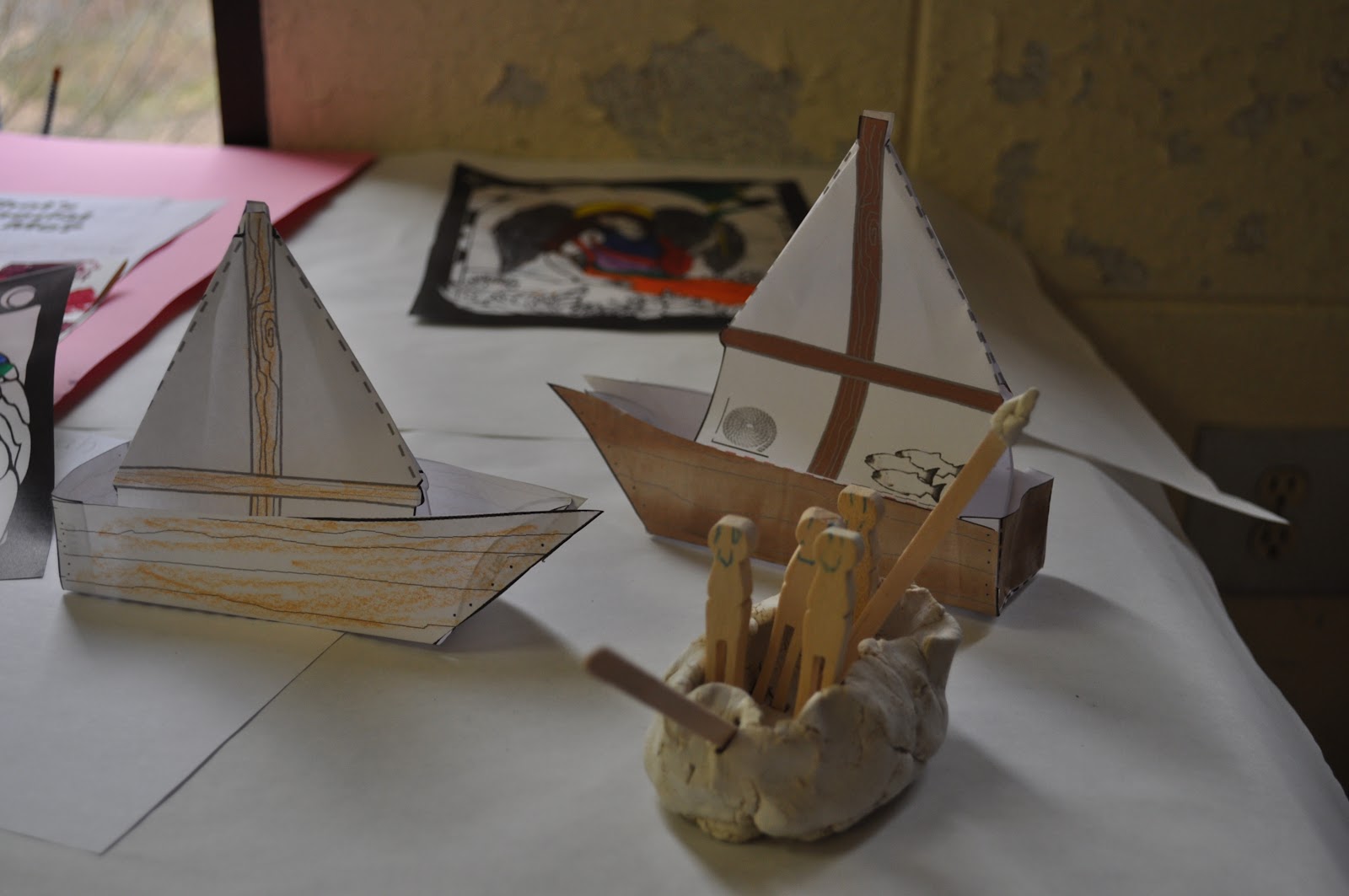
1. Two Dimensionally:
Besides drawing or painting story scenes, a class could work on creating a scene for each of the stories together. I can imagine a big boat on butcher paper and the kids making lots of fish, the fishermen, a net, Jesus, etc. You could also create the banquet scene: Levi, Jesus, his friends, and tables heavily laden with food (from magazine collage pictures or drawn.)
2. Three Dimensionally: Make items from the story (a boat, a banquet table with clay or
felt, boats (paper folding) or felt, lake, money bag.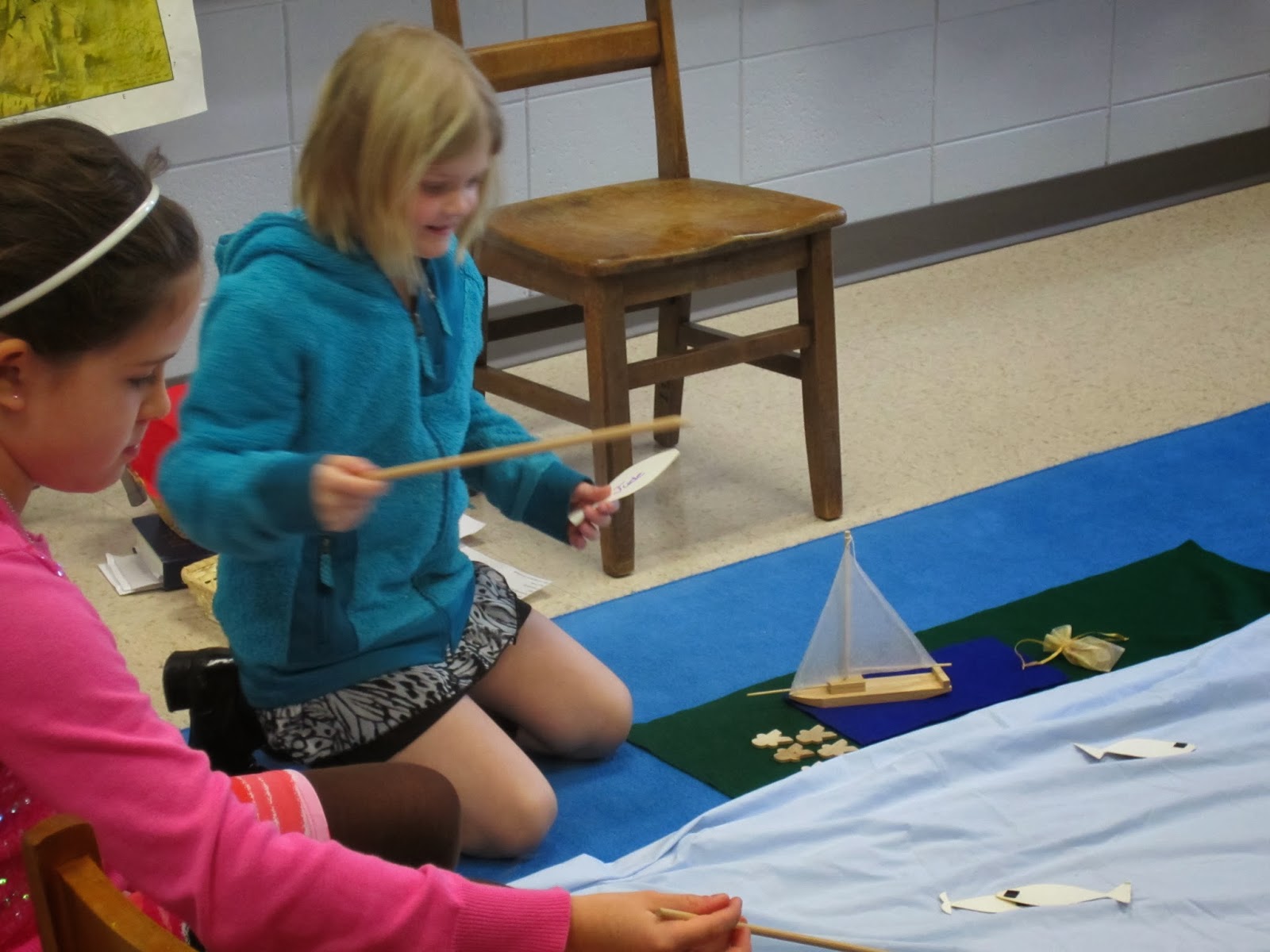
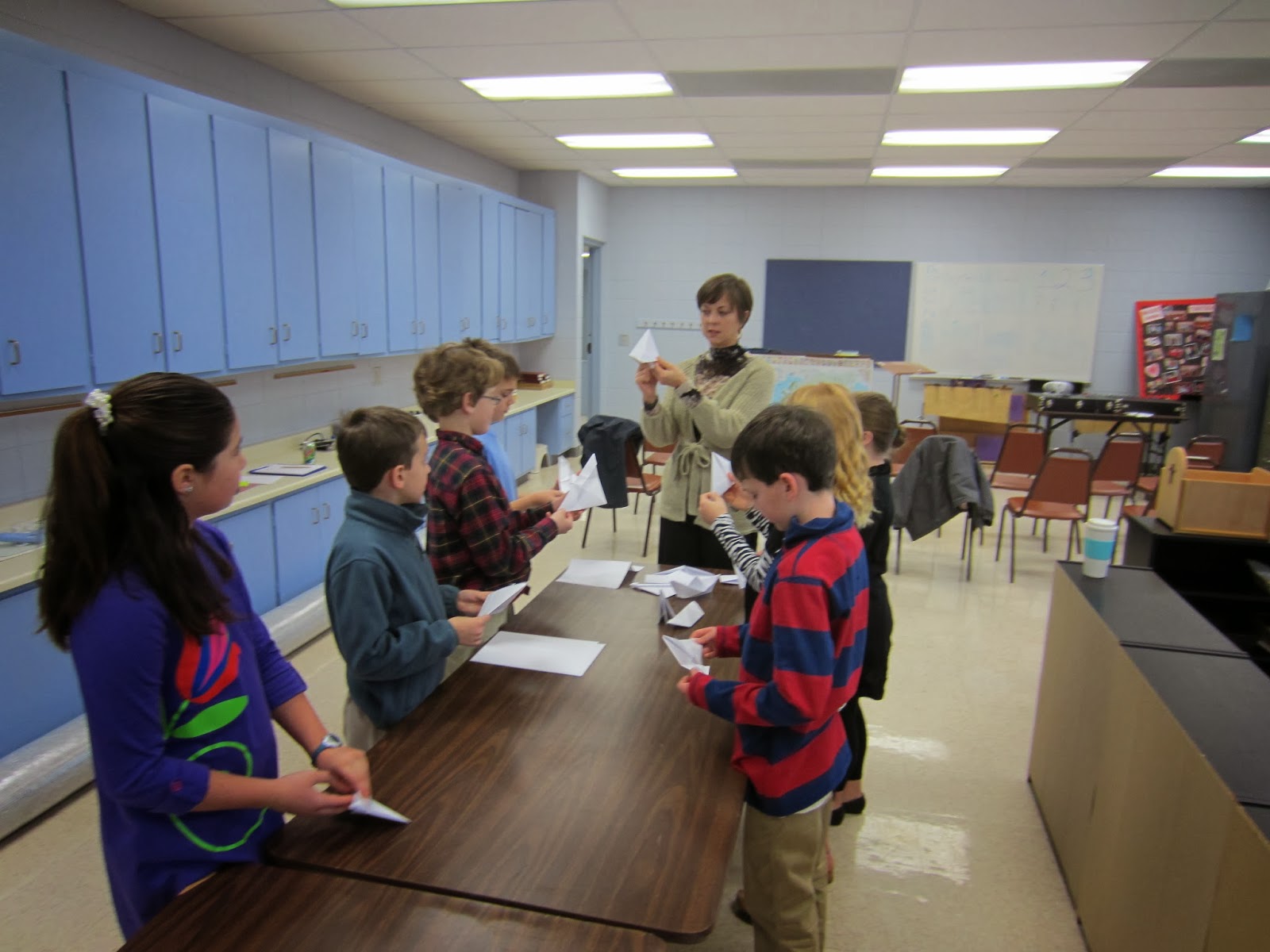 Or you could talk about the story as you fish, like these children in our third grade class.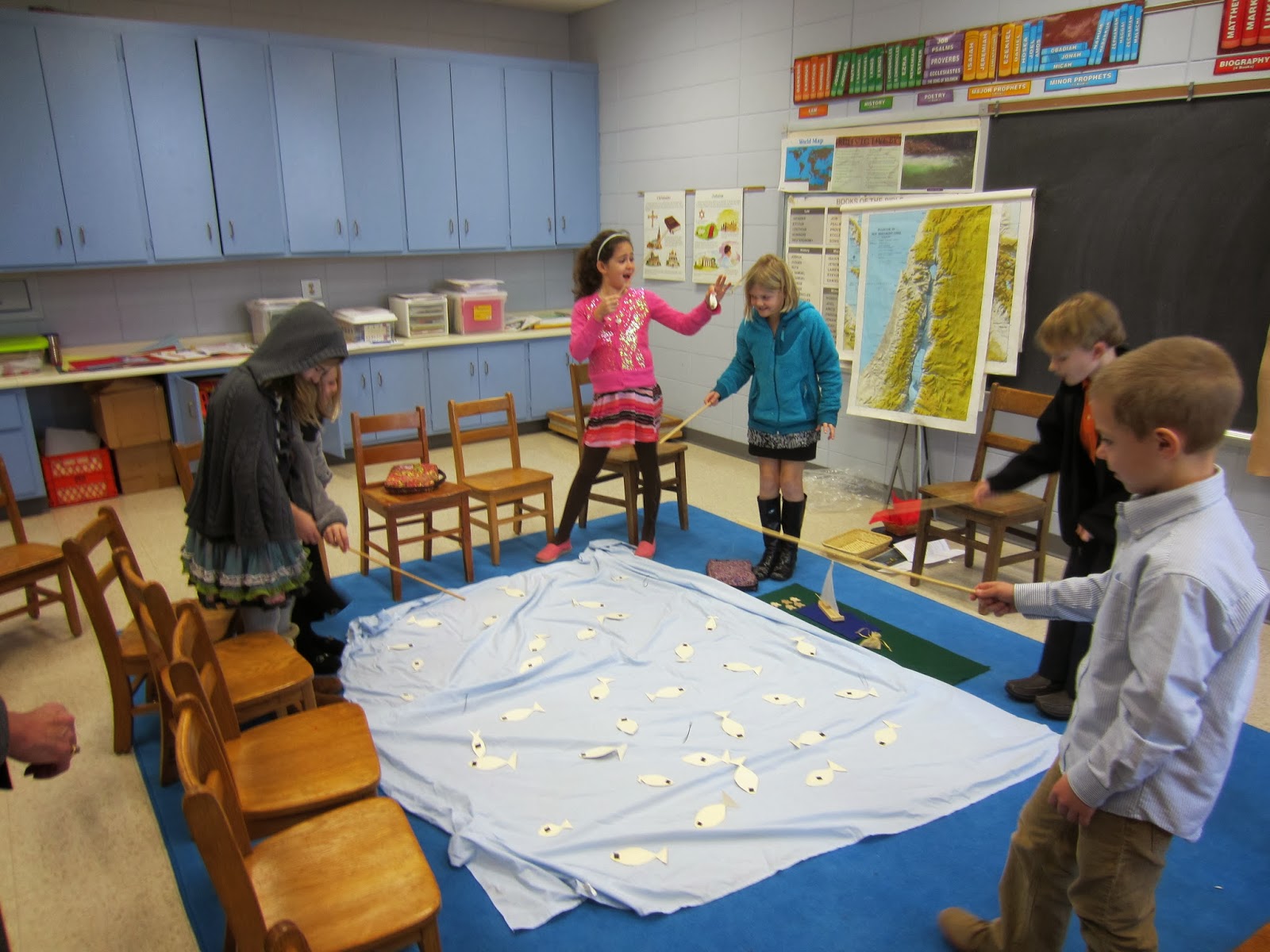
Make Artwork Focused On Being a Disciple
1. You could suggest the children head their paper: Disciples Do Jesus’ Work. Then they could draw or watercolor or do a collage showing how we do Jesus’s work: helping others, visiting the sick, feeding the hungry, being a peacemaker, sharing what we have, etc.
2. You could focus on the fishermen and Levi’s decision to be a disciple, drawing a before and after of what each person’s life might have looked like. (Before: Peter mending nets, fishing in a boat, selling his fish. After: following Jesus, watching him teach the crowd, helping him go from town to town, telling others about how his life has been changed by Jesus.
Spend Time Learning/Researching the other Disciples
Children may want to search for the names of the other disciples and draw all twelve, labeling them with their names. (Find this in Luke 6: 12-16) If you like, assign each child a disciple and have the children draw a face, labeling it with the name they were given. They could include their own face and name with the 12 for a great classroom decoration.
Want to help the children learn the disciples’ names? There’s a song at the website here. Could they rewrite it into a rap song? (I know they could!)
For more art response ideas to spark the children’s own thinking, see my Pinterest page, here.
Enjoy!
Love, Becky