
Welcome
Becky Ramsey | Author & Children’s Minister
Children's Sermons
Discover children’s sermons, or search our sermon directory

What is Godly Play?
According to the Godly Play Foundation, Godly Play is a creative and imaginative approach to Christian nurture.
Godly Play is about understanding how each of the stories of God’s people connects with the child’s own experience and relationship with God.
Godly Play respects the innate spirituality of children and encourages curiosity and imagination in experiencing the mystery and joy of God.
Read more about Godly Play here.
How do we do Godly Play at First Baptist Greenville?
Christians of many different denominations use Godly Play and probably do it differently, even within the same denomination. In this blog, I describe Godly Play by sharing the way our church does it. That doesn’t mean that it’s the best way or the prescribed way, or the only way, of course, but it’s the way that suits us best.
What are we here for?
We meet here to talk about Godly Play, to share what it’s all about and to discuss how to do it better.
The weekly blog posts are designed to help Sunday school teachers prepare for their Godly Play lessons, and the individual pages (see the tabs at the top of this page) share information about how we do Godly Play at First Baptist Church, Greenville, SC.
We’d love to hear from teachers everywhere, not just the ones at our church! We hope you’ll join our circle and share your ideas!
What Godly Play is Not
Godly Play is quite different from the traditional model in which the teacher tells the children what they need to know. Godly Play is not about things that are that simple. It is not just about learning lessons or keeping children entertained. It is about locating each lesson in the whole system of Christian language and involving the creative process to discover the depths of meaning in them.
Knowing Jesus in a New Way 1: Known in Absence
Welcome to Knowing Jesus in a New Way 1: Known in Absence.
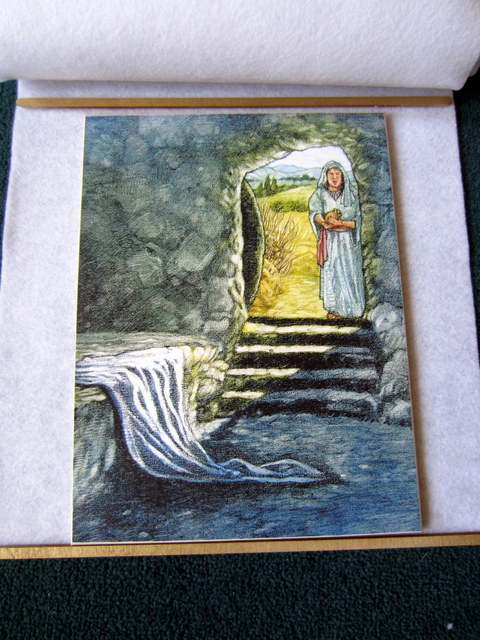
This week’s story always gives me goosebumps-especially the moment when Jesus calls Mary’s name and she recognizes him. It’s hard to think of a story that would be more full of suspense and fear and joy, and the script for this Godly Play lesson does such a great job of sharing all of that with the children. I’m so glad that we don’t have to cram all of the after-Easter stories into Easter Sunday! It’s a luxury to be able to enjoy them and study them over several weeks.
The script is shared in the book that comes in the basket with your story tiles. This series is told much like the Easter series, with each lesson shared in a weekly tile, presented in sequence. The book suggests that after the story is shared, that you give the children time to find something among your Godly Play materials that helps further tell/illustrate the story. I hope that if you have the materials out in your room that you’ll do that. I’ll also include wondering questions for you for each week.
Here are the wondering questions for this week. Thank you so much for taking time to jot down responses so that we can share them with the parents. They have shared that they find it meaningful and enjoy feeling connected to what happens in class.
Wondering Questions:
1. I wonder what your favorite part of today’s story is.
2. I wonder what the most important part of today’s story is.
3. I wonder if there are any parts of the story we could take away and still have everything we need.
4. I wonder if there are ways we can learn about Jesus even though he’s not here with us. I wonder what those ways might be.
5. I wonder what God is trying to teach us with this story about loving Jesus even when we’re not with him.
Gift to God Response Time Ideas:
There are a couple different ways children can respond to the story: either by (1)retelling it through art with the ideas below, or (2) by exploring ways in which they can know Jesus in his physical absence.
(1) Retelling the story of the empty tomb through art.
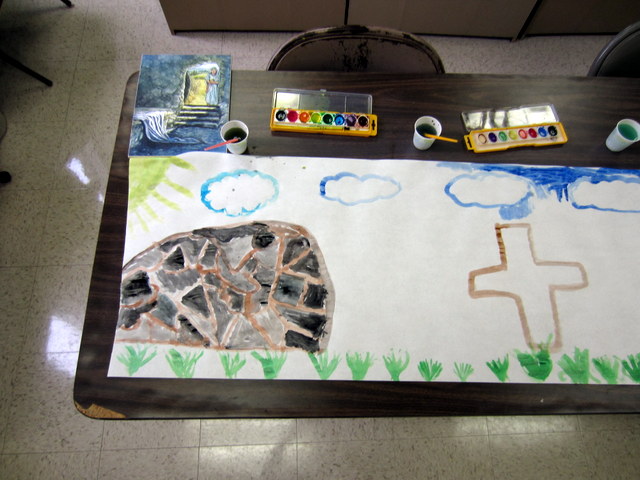 Children may want to brainstorm how they might represent the empty tomb story with their own ideas. Could they make a cave with clay, and add some strips of linen to the inside, with a large stone rolled away? Could they build the tomb with Lego or Lincoln Logs (feel free to help yourselves to the materials in the game room.) Or make it out of paper plates?
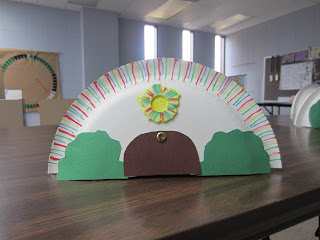
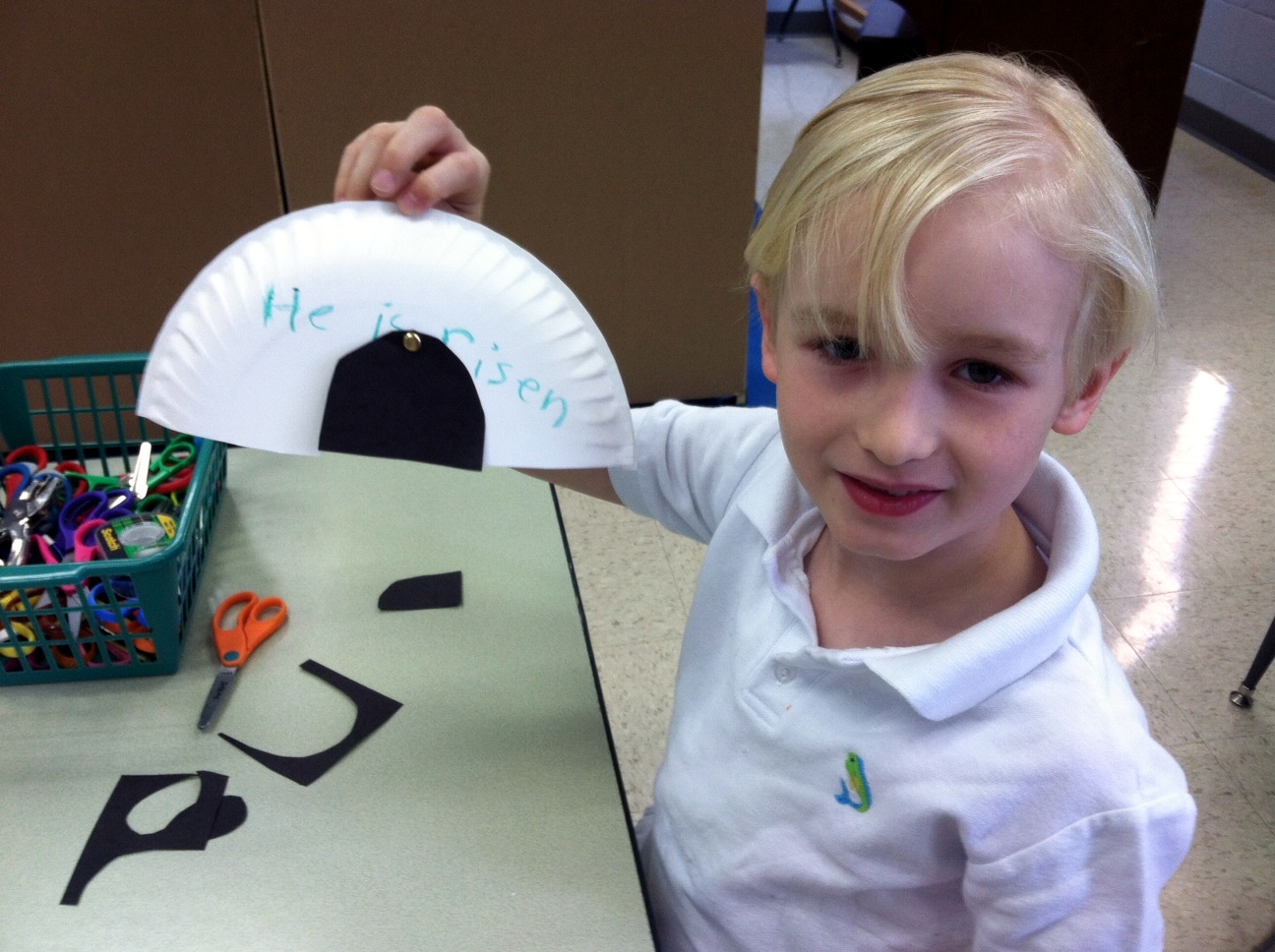
Could they make the people in the story: the three Marys, Peter and John, Jesus as the gardener? Could they act out the story for the class using the materials they made? If they choose to do this, please do take photos!

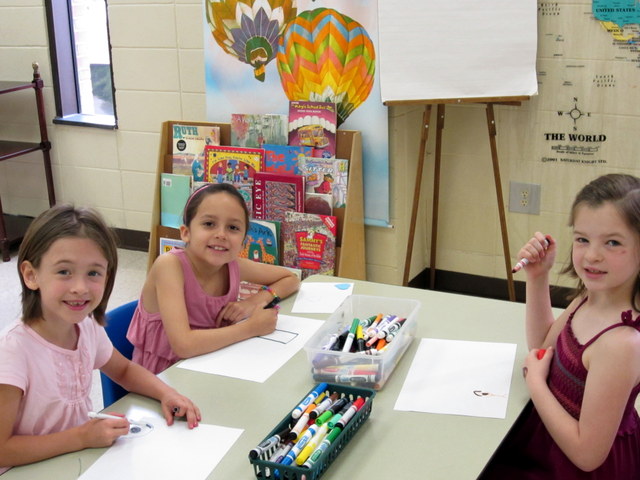 Or maybe they’d like to paint the story or draw it. You could also make the cave as shown here orhere
or here.
Or if you’re in the mood to cook, why make Resurrection Rolls? They turn out sort of like popovers-hollow in the middle like a cave. The recipe is here. You can use the oven in the parlor or make them ahead at home.
2) Exploring ways in which they can know Jesus in his physical absence
Hopefully the children will share ideas during the wondering questions of how they can know Jesus even though he’s not physically with us. They could work together to illustrate a mural / list of these ways, including reading the Bible stories about Jesus, (ask the children to look through the Gospels and pick out their favorite ones and illustrate those,) listening to teachers and preaching about Jesus, praying, looking at artwork that artists have done about Jesus and his life, studying the Jewish faith that Jesus came from, learning about Jesus from the ways other Christians treat people. (This is a tricky one, isn’t it?)
I’m sure the children will think of even more ideas of ways to learn about Jesus.
Children could also explore how they “see” Jesus in other people. How can we act to make sure people see Jesus in us? This could be a great subject for a mural or class project.
Find more art response ideas at my Pinterest page on the Empty Tomb, here.
I hope these ideas help!
Love, Becky